योगश्चित्तवृत्तिनिरोधःPatañjali's Yoga Sūtra in four decks
195 cards, one for every sūtra. Each carries the Sanskrit, a new translation and a painting framed like an Indian miniature folio. A guidebook adds a reading, a practice and the words of Vyāsa, the text's oldest commentator. Use them to learn the sūtras, or draw one each morning for reflection.
One email when the decks launch, and nothing else. Your address is kept privately and never shared.
Four decks, one for each chapter
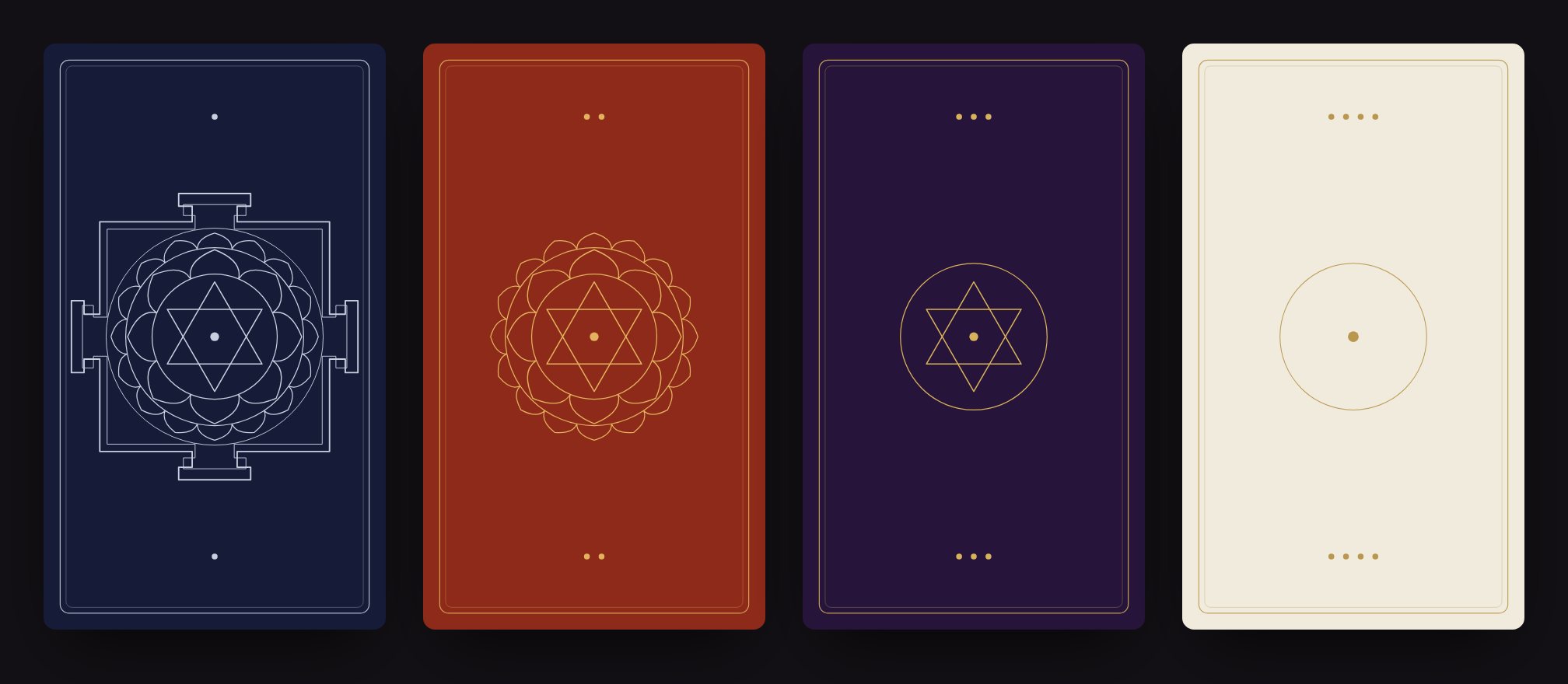
The Yoga Sūtra has four pādas, or chapters. Each deck has its own colour, and each card back carries a yantra that loses a layer from deck to deck. The text moves toward stillness, and the decks move with it.
What is on every card
The card
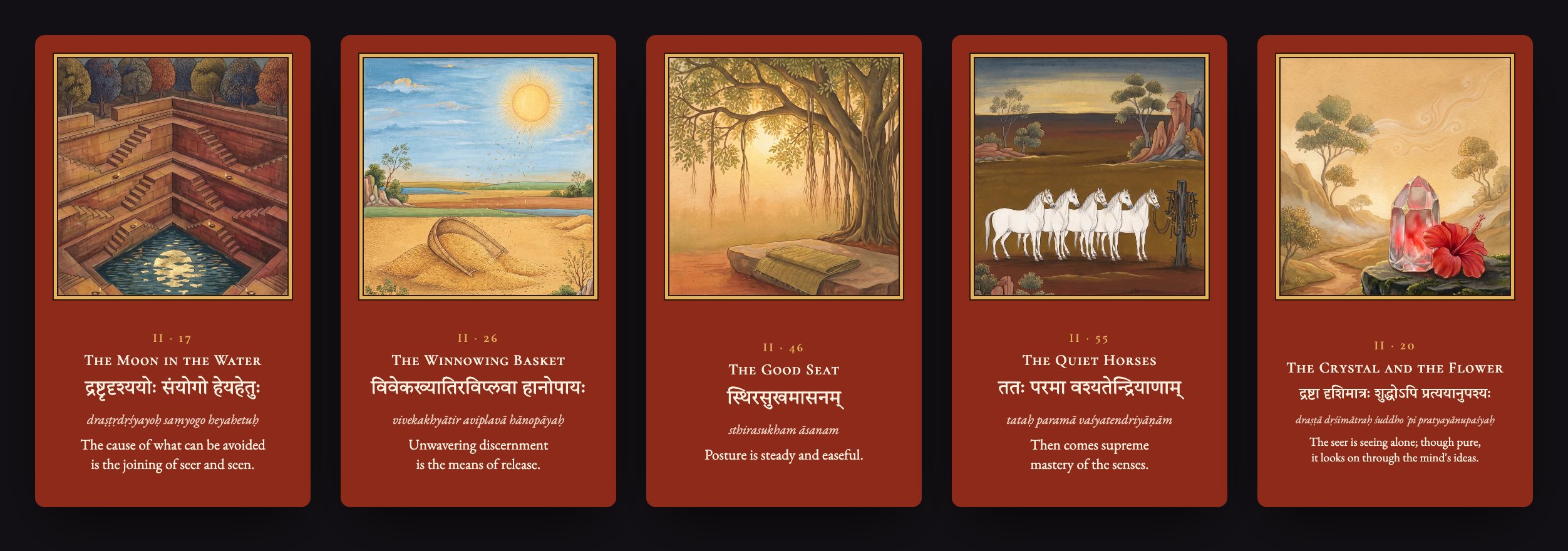
- A painting, set in a ruled folio frame as Pahari and Rajasthani miniatures are mounted
- The sūtra in Devanagari and in roman transliteration
- A clear new translation, made word by word from the Sanskrit
- A name to remember it by, such as The Moon in the Water
The guidebook
- A word-by-word breakdown of the Sanskrit
- A short reading of what the sūtra teaches
- A practice to do that day
- The words of Vyāsa, the oldest commentary, with page references
- A question for when you draw the card, and its meaning reversed
“Just as a system of medicine has four divisions, on disease, the cause of disease, health and remedy, so this system also has four divisions.”Vyāsa on Yoga Sūtra 2.15, tr. J. H. Woods (1914)
A reflection draw, not a fortune
A drawn card tells you where to put your attention today, not what will happen. The spreads come from the text's own lists: the five afflictions (2.3), the eight limbs (2.29) and the three fires of kriyā yoga (2.1). A reversed card points to one of the nine obstacles Patañjali names in 1.30, so even a hard draw teaches something from the text.
Study free, now
The companion app is free at yogasutra.net. Learn the sūtras with spaced repetition, put passages back in order, draw spreads, and see all 195 on a spiral map that links the ideas they share. The full Sādhana deck is there today.
How the decks are being made
The text
The Sanskrit follows the Ānandāśrama edition of 1904. Every translation is made fresh from the Sanskrit, and every quotation from Vyāsa is checked against the source. The Sādhana deck is written; the other three are in progress.
The paintings
The images you see now are AI-generated placeholders. The aim is for the printed decks to be painted by hand by a living miniature painter working in the Pahari or Rajasthani tradition. Joining the list is the best way to help make that happen.